In a rapidly evolving environment like web development, it’s usually difficult to predict watershed events and technologies before they appear. The obvious example today is AI, which rapidly went from being the subject of lab experiments and science fiction to a daily tool for many people.
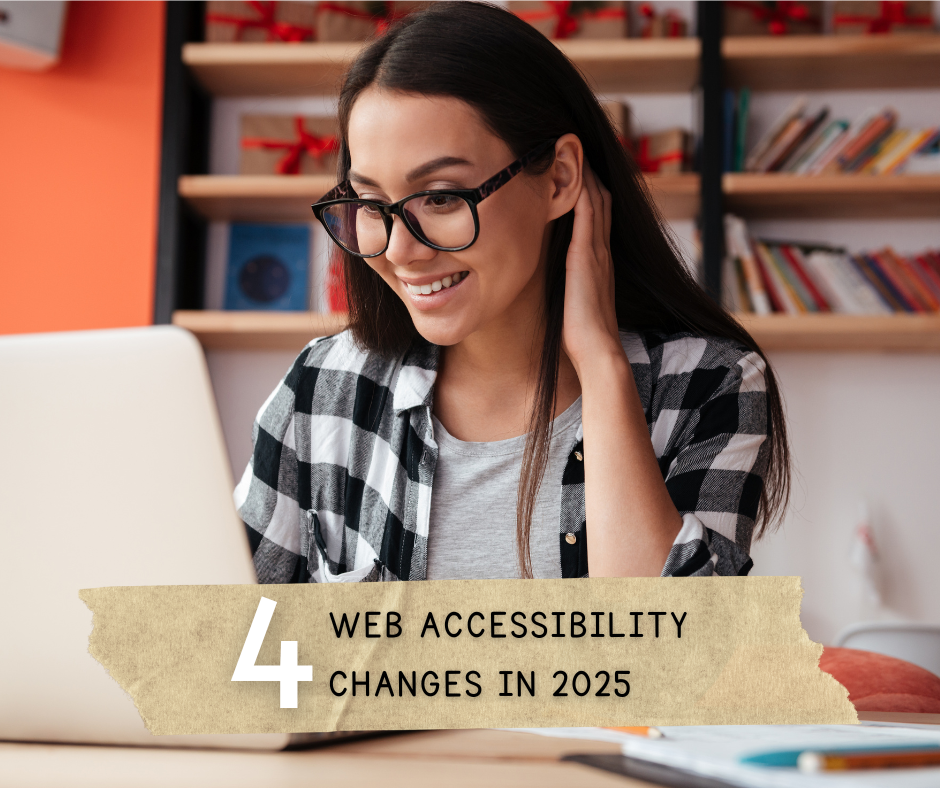
Another major movement in web design is increased focus on web accessibility (across a broad range of disabilities), which will lead to shifts in how we design our websites, the tools that power them, and even the legal requirements governing websites. Let’s look at a few aspects of accessibility trends today and how they will impact website owners and creators.
New Features to Accommodate a Range of Disabilities
Several years ago, before I began my career in web design, I thought that an “accessible” website just meant one that was compatible with screen readers. Screen readers are assistive devices that help people who are blind or visually impaired navigate websites. Of course, screenreader compatibility is a critically important element of web accessibility! Today, though, web accessibility standards are much broader and consider many conditions that may not have any relation to visual impairment.
As design tools advance and creators and thought leaders in design become more aware of different ways to make sites accessible, we’re seeing new ways to make websites that are more useful for people with seizure disorders, ADHD, cognitive impairments, and other challenges that impact how someone browses a webpage.
Granular Visual Customization Options
As the tools that we use to create websites advance over time, web designers have ever more options to provide customization and a tailored personal experience. Today, customization often focuses on sales and product targeting efforts, but in this case, I’m talking about tools that allow an individual user to apply filters that change the visual appearance of a site. The first common example of this was light and dark mode, but new tools give a site user the option to fine-tune elements like the saturation, color scheme, and contrast on a page.
This is a great example of how accessibility measures can benefit everyone, not just those who are navigating the web with a particular limitation, such as visual impairment. Perhaps you are doing research, and you need to read a substantial amount of text on a site that has contrast that is too high or too low. If you could adjust the contrast up or down, you could prevent eye strain and enhance your experience. Everyone wins! You, the user, accomplish your task in comfort, and the website owners have a satisfied user rather than a disgruntled one with a headache.
AI Tools for Accessibility
As you’ve probably already guessed, AI tools are playing a large part in driving current changes in web design and development. One of the most exciting possibilities is the way AI-enhanced tools allow us to implement some of the features that we’ve been discussing. Stand And Stretch is partnering with accessiBe, a company that delivers a powerful tool that allows us to seamlessly offer these new types of accommodations and customizations.
AI-powered tools like the one created by accessiBe will be especially crucial for smaller businesses and organizations seeking to move their sites towards compliance with developing accessibility guidelines and best practices. With a tool like accessiBe, it’s simple and takes minimal development time to integrate a high-quality suite of accessibility options. Manually implementing all the necessary changes would be too costly for most smaller organizations.
If you’re curious to see an accessibility tool in action, look no further than the page you are reading right now! Select the blue icon in the lower right corner of the page, and you can test-drive the accessibility features we’ve been discussing.
Changing Legal Requirements and Web Community Standards
At this time, there are a lot of questions about the future of the legal landscape surrounding web accessibility. The situation is especially complex for sites that serve users from different countries and regions, such as an ecommerce business that sells products in the United States, Canada, and Europe. At Stand And Stretch, the bulk of our clients are small and midsize American companies, so we focus primarily on the American legal environment, but some coming developments will likely be international and perhaps even global.
In a significant move, the DOJ released updates to the ADA last year requiring state and local governments to enhance accessibility for assistive devices. For private businesses and organizations, Title II of the ADA is not mandatory. However, the types of standards set by the ADA are influential and could signal other future regulations. In the future, there may be more stringent legal requirements for smaller private business websites, and staying up to date with accessibility practices is one way to mitigate future risk. Other standards like WCAG (Web Content Accessibility Guidelines), created by the Web Accessibility Initiative, are developed by non-profits and consortia from around the world. These standards are not legal requirements, but following them as much as possible is still wise.
Following accessibility best practices is a form of good digital citizenship and also offers some important benefits to the site owner. Besides intangibles like creating goodwill and enhancing your reputation as a business, operating an accessible site broadens your potential base of users or customers.
Increased Awareness and Broader Implementation of Accessibility Practices
Thanks to several of the factors mentioned above, I anticipate that we’ll see more and more sites incorporating accessibility measures into their site design. With new tools that make it easy and cost-effective to implement changes, it’s now feasible for small organizations to greatly enhance the accessibility of their sites.
This is great news for anyone who has a disability that makes navigating the web challenging, and for anyone operating a website who would like to make it more accessible. If you’re curious about how your existing site measures up, check out accessiBe’s free audit tool. This analytic tool will scan your site and almost instantly give you a list of ways to improve accessibility.
If you have more questions about web accessibility and what it might mean for you and your business or organization, don’t hesitate to visit our contact page and reach out! Stand And Stretch is here to answer your questions and help you navigate the ever-changing world of web design and digital marketing.

Neva manages the day-to-day of the web department, takes the lead on production for web design, and helps clients develop content for new web projects. She also assists in a variety of our digital marketing and SEO services. When she’s not designing websites, she enjoys yoga, hiking, reading classic novels, and baking.